Beacon Aligned & informed from OECD Learning Compass 2030 · Ready for PISA 2029

Students are growing up in a world where AI literacy is NO longer optional.

39% of the skills employers need will change by 2030 — and AI is the biggest reason. — World Economic Forum, Future of Jobs Report 2025

Beacon helps schools build AI literacy through conversation, play, and signal detection — across four progressive domains mapped directly to the OECD Learning Compass 2030. Assessed after every session.

See the framework alignment →
Meet Beacon,
the wise Owl
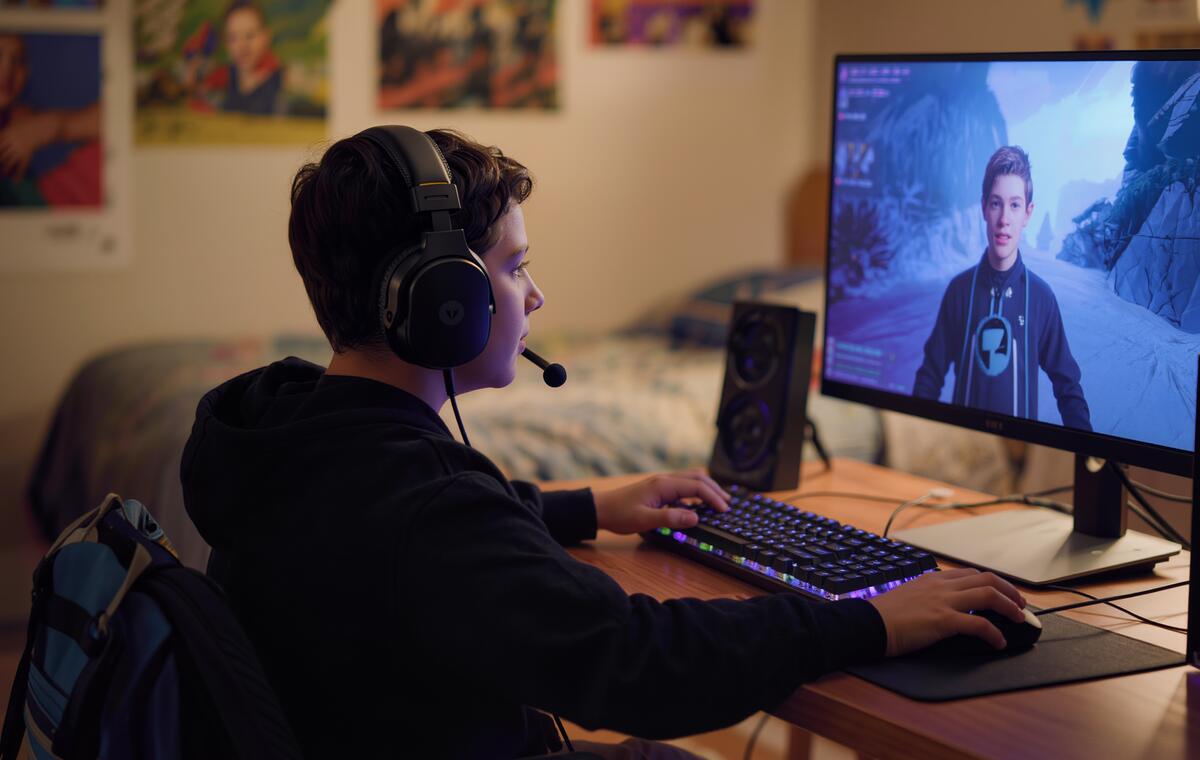
Student gaming at home

Beacon meets students inside whatever they're already into.

Gaming. Makeup. Football. Music whatever their interests are. Beacon finds the AI literacy moment inside it.

Student learning about AI on her phone
that filter isn't actually seeing your face. it's guessing where your eyes and mouth are based on millions of other faces.
really? show me
watch what happens when you tilt your head sideways — the filter starts to break.

Conversation and play — never lessons.

Every interaction is an experience. Students build AI literacy the way they build any other genuine understanding — by doing.

Teacher reviewing Beacon School Dashboard
🦉 Beacon School Dashboard — Student Progress
D1 · ENGAGE
★★★
D2 · CREATE
★★
D3 · MANAGE
★★
D4 · DESIGN
★★★

Measured progress. Never their conversations.

Teachers see domain levels, stars earned, and manipulation detection scores — per student. Conversations stay private. Privacy is technically enforced.

Beacon Literacy Compass

Four domains. One outcome.

Beacon operationalises the OECD's Transformative Competencies through four progressive, conversation-based AI literacy domains. Each domain has defined levels of mastery. Students only progress to the next domain once they have mastered the current one.

Aligned & informed from OECD Learning Compass 2030 · Ready for PISA 2029

The Domain
Levels of Mastery
Framework Alignment
Domain 1 — Engage
What AI is, how it works, its fundamental limits.
Students stop trusting AI blindly — and start questioning confident answers.
Three progressive levels of mastery — assessed after every session.
Students progress from understanding what AI is, to questioning it unprompted.
OECD Learning Compass 2030
Foundation Competency
Foundation for all three OECD Transformative Competencies — understanding the tool before using it.
Domain 2 — Create
Using AI effectively, intentionally and responsibly.
Students use AI to sharpen their own thinking — not replace it.
Three progressive levels of mastery — assessed after every session.
Students progress from improving prompts to instinctively verifying AI output.
OECD Transformative Competency
Creating New Value
Using AI as a thinking partner to generate ideas and solutions.
PISA 2029
Creative Thinking Domain
Domain 3 — Manage
Critical thinking, bias detection and ethical judgement.
Students catch hallucinations, identify bias, and know when not to use AI at all.
Three progressive levels of mastery — assessed after every session.
Students progress from catching hallucinations to making ethical judgements about AI.
OECD Transformative Competency
Reconciling Tensions & Dilemmas
Navigating the gap between AI capability and human values.
PISA 2029
Critical Evaluation of Sources
Domain 4 — Design
Shaping AI systems and understanding societal impact.
Students connect AI governance to their own values — and imagine futures worth building.
Four progressive levels of mastery — assessed after every session.
Students progress from identifying who benefits from AI to connecting governance to their own values.
OECD Transformative Competency
Taking Responsibility
Understanding systemic consequences and connecting governance to personal values and civic life.

Three activities.

Beacon doesn't teach about AI. It runs activities that make students experience how AI actually works — and where it breaks. Here are three examples of what happens inside a real Beacon session.

01
Understanding Limits
Students learn that AI sounds confident even when it's wrong — and experience it firsthand.

An activity that makes the structural limits of AI tangible. Students don't just hear about hallucination — they encounter it, check it, and understand why it happens.

Domain 1 · Engage OECD · Foundation Competency
02
Spotting the Difference
Human or AI? Students learn to identify what gives AI-generated content away.

An activity that builds the critical instinct to question whether content was written by a person or generated by a machine — and understand the difference in what that means.

Domain 3 · Manage OECD · Reconciling Tensions PISA 2029 · Critical Evaluation
03
Shaping the Answer
Students discover how the quality of their question shapes the quality of AI output.

An activity that builds the instinct to think carefully about how to work with AI — developing their own ideas rather than accepting the first answer they're given.

Domain 2 · Create OECD · Creating New Value PISA 2029 · Creative Thinking

Built for students. Designed with their privacy first.

Beacon is an AI literacy companion — not an emotional companion. It teaches students to think clearly about AI, measures their progression, and steps back. Privacy is technical, not just promised.

01
Beacon stays in its lane

Beacon teaches AI literacy. It does not pretend to be a friend. It does not foster emotional dependency. Sessions end naturally.

02
Conversations are private

Schools see levels, stars, and progression data. They never see what a student actually said. Privacy is technically enforced, not just promised.

03
Always being watched over

Three tiers of safety detection. Human review within 4 hours of any concern flagged. Parental consent required under 16.

Levels visible. Conversations private. What Beacon and each student talk about stays between them. What they learn shows up as measurable progress you can defend to inspectors and parents alike.
Privacy by design
How we keep students safe →

Bring genuine AI literacy into your school — without rebuilding the curriculum.

Join the waitlist. We're opening Ignition to a small group of UK secondary schools first — so every pilot gets the attention it deserves.

No spam. No pressure. We'll reach out when pilot slots open.